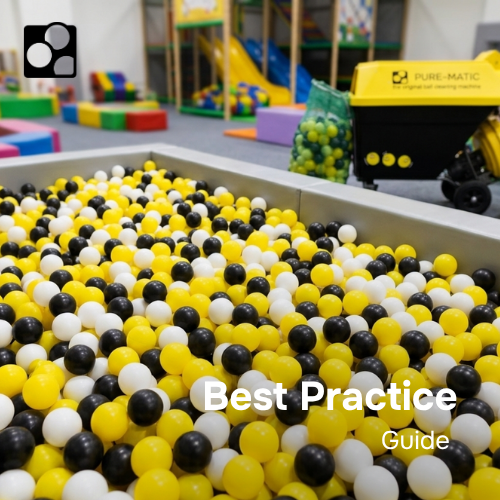
How to Clean a Ball Pit: A Step-by-Step Hygiene Guide for Operators
No legal rule says how often to clean a ball pit — so the proof is on you. Here's a practical routine that keeps balls hygienic.
How to Clean Your Ball Pit
A practical, step-by-step routine for keeping ball pit balls hygienic — based on the dirt we actually find at the bottom of the pit and in the Pure-Matic ball cleaning machine.
The Pure-Matic ball cleaning machine is manufactured by Euro-Matic, the original producer of ball pit balls and cleaning systems since 1994.
Why is it important: In most countries there is no specific regulation stating how often ball pits and balls must be cleaned. That shifts the full burden of proof onto you: if an inspector, insurer or concerned parent ever asks, it is the operator who has to show the hygiene process is adequate — not the authority who has to prove it isn’t. This guide is a routine that keeps your pit genuinely clean and keeps you protected.
Two reasons you’ll need to clean
1. Scheduled cleaning, by traffic
Routine, planned cleaning based on how many children pass through the pit. This is your baseline — the documented schedule you can point to at any time.
2. Sudden contamination
Vomit, food, a spilled drink or any other unexpected mess — with rarely any time to call an external cleaning service. You need to handle it on the spot, fast. Pure-Matic was designed for exactly these two situations.
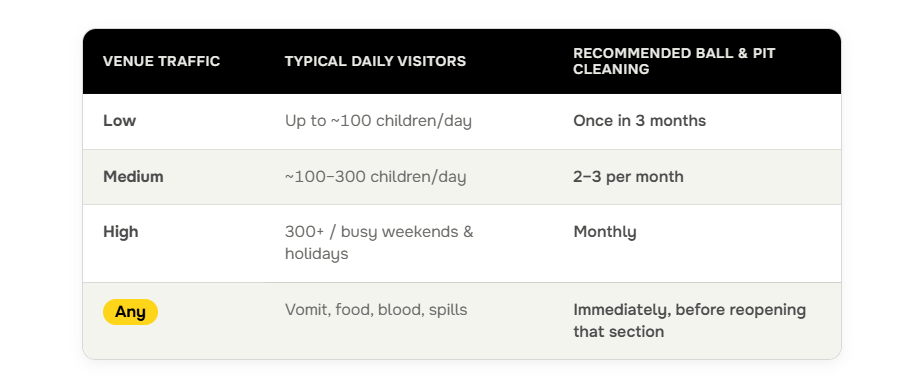
Recommended cleaning frequency
There is no legal minimum, so the table below is a practical guideline based on visitor traffic. Adjust upward during holidays, birthday-party peaks and cold/flu season. On top of the schedule, always clean immediately after any contamination.
Tip: log every cleaning (date, time, who, which solution). A simple logbook or photo record is the single most useful thing to have ready for an inspection or a parent’s question.
When & how to run the machine
We recommend running it when the venue is closed: before opening, after closing, or during a scheduled break, the usage can be disruptive to visitors. This also gives the balls time to dry before children return (see below).
One operator works, two works better. A single person can run the whole process, but with two people it is noticeably faster: the machine never has to be switched off to swap the collection bags, so the cycle runs continuously while the second person manages bags and cleans the empty pit
.The cleaning routine, step by step
- Empty & load. Feed the balls into the Pure-Matic. It cleans up to 15,000 balls per hour, so even a large pit is done in a single session.
- Use the right solution. Water alone removes some surface dirt, but the cleaning agent is what makes the balls truly hygienic. Don’t skip it or under-dose it (see the next section).
- Collect into the net bags — and plan for runoff. As cleaned balls drop into the mesh collection bag, water drips off them and pools underneath. Place a tray, drain mat or bucket under the collection point so you’re not left with a puddle on the floor.
- Clean the empty pit while the balls dry. This is the best-used downtime you have. With the balls out and draining, wipe and disinfect the floor and walls of the pit — this is where the dirt actually accumulates.
- Let the balls dry, then refill. Only return the balls once they are dry. Don’t rush this step.
The disinfectant is not optional
Cleaning ball pit balls has two inseparable layers: removing visible dirt, and eliminating the invisible pathogens (E. coli, Staphylococcus aureus, norovirus, fungal spores) that visible cleaning never reaches. The machine handles the physical work; the solution does the hygiene work. Balls that merely look clean can still carry a real infection risk.
Why we recommend EasyClean
EasyClean is the disinfectant developed specifically for the Pure-Matic, with hygiene performance verified by an independent accredited laboratory:
- 95% bacterial kill rate, independently lab-tested against bacteria, viruses and fungi.
- No rinsing required — no chemical residue, balls are ready as soon as they’re dry.
- Safe for children — Allergy UK certified; active ingredient is hypochlorous acid (HOCl), the same compound the human immune system uses.
- Documented & certified — EU/UK biocide compliant, with traceable paperwork you can show an inspector.
Dosage: fill the machine with 100 L of clean water to the marked line, add 320 ml of EasyClean, and start the cycle. One 5 L canister covers about 15 full washes.
The mistake to avoid: refilling too soon
We strongly advise against returning the balls to the pit immediately after cleaning. There are two clear reasons, both of which we see again and again:
- The pit floor is filthy. We routinely find a large amount of dirt at the bottom of the pit. If you tip clean balls straight back in, they land on that dirt. Clean the empty pit first — that’s what the drying time is for.
- Wet balls create a hidden puddle. If balls go back wet, water collects at the bottom of the pit. Children’s socks and clothes get soaked — an immediate complaint, and a slip and mold risk over time.
The sequence that avoids both problems is simple: clean the balls → let them drain and dry → clean the empty pit in the meantime → refill only when everything is dry.
Quick checklist
- Follow the traffic-based schedule — and clean instantly after any mess.
- Run the machine when closed; it’s loud.
- Two operators = continuous cycle, no stopping to swap bags.
- Always use the disinfectant at the correct dose.
- Catch the drip-off under the collection bags.
- Clean the empty pit; refill only when dry.
- Keep a cleaning log.
You may also be interested in
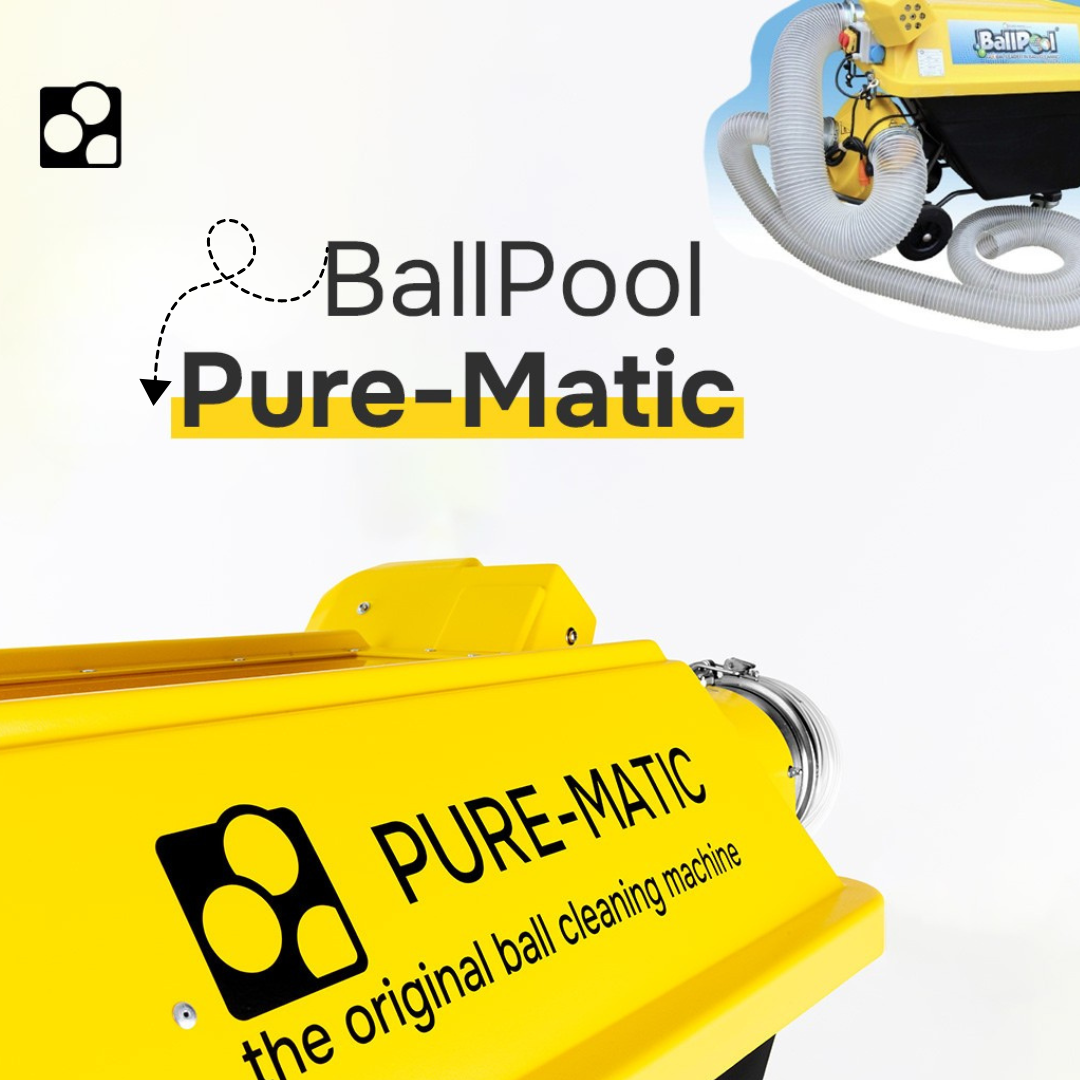
The Pure-Matic Story: How the World's First Ball Cleaning Machine Became Part of the Euro-Matic Family
24/07/2026
The machine that cleans ball pit balls was invented by the Dutch company Van Veen Design — theirs was the first and original ball cleaning machine, the BallPool. In 2023, Euro-Matic Kft., the Hungarian ball manufacturer, acquired the BallPool machine and its complete manufacturing know-how, and since 2025 the machine has continued its story under the Pure-Matic name, as part of the Euro-Matic family. This article traces the full journey: from the Dutch workshop, through the BBW models, to today's Pure-Matic.
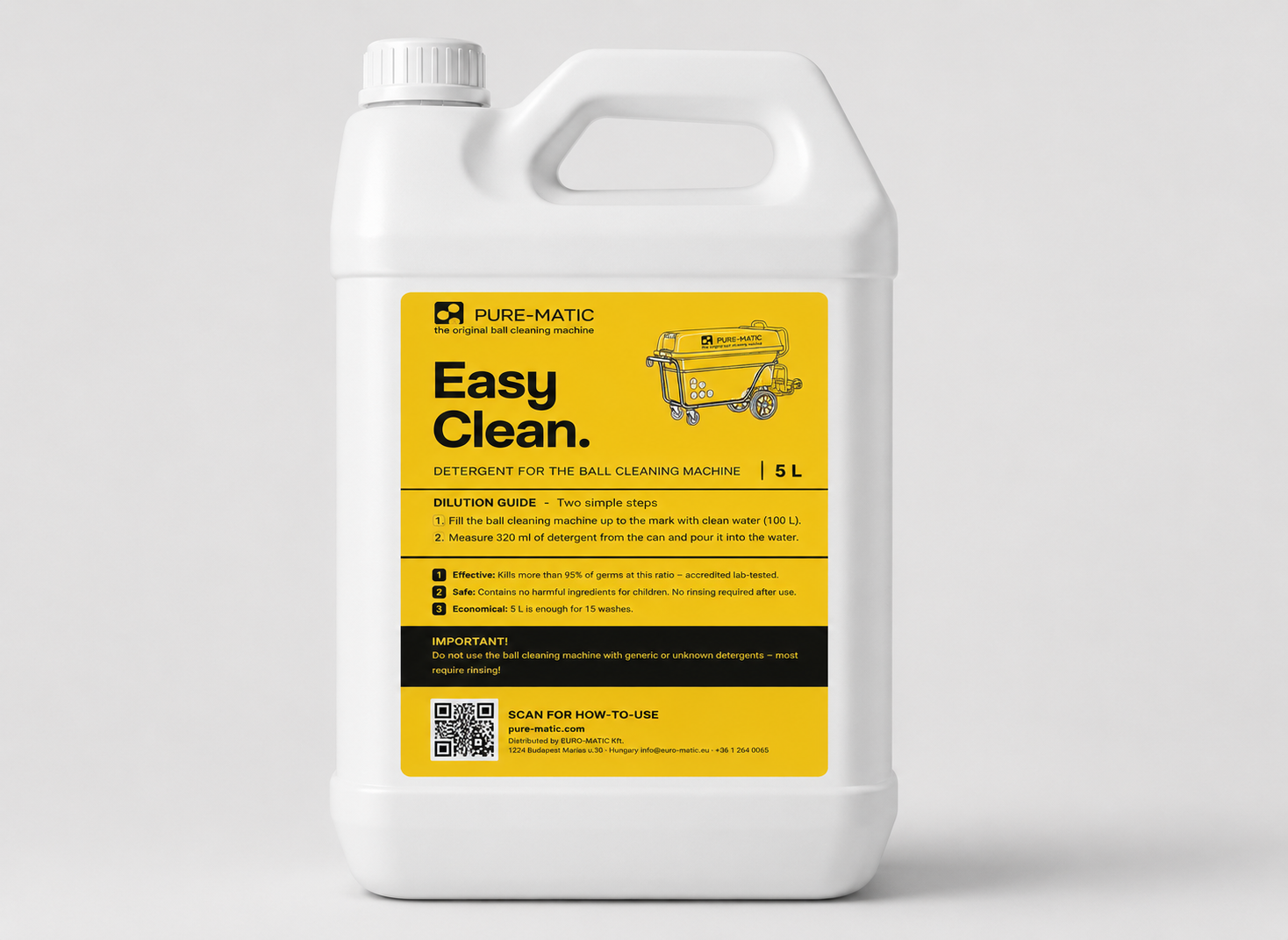
The ball pit detergent that actually disinfects: Inside Pure-Matic's lab-tested formula
18/05/2026
Why a general cleaner isn't enough for ball pit balls. Inside Pure-Matic's lab-tested detergent: no rinse, safe for children.
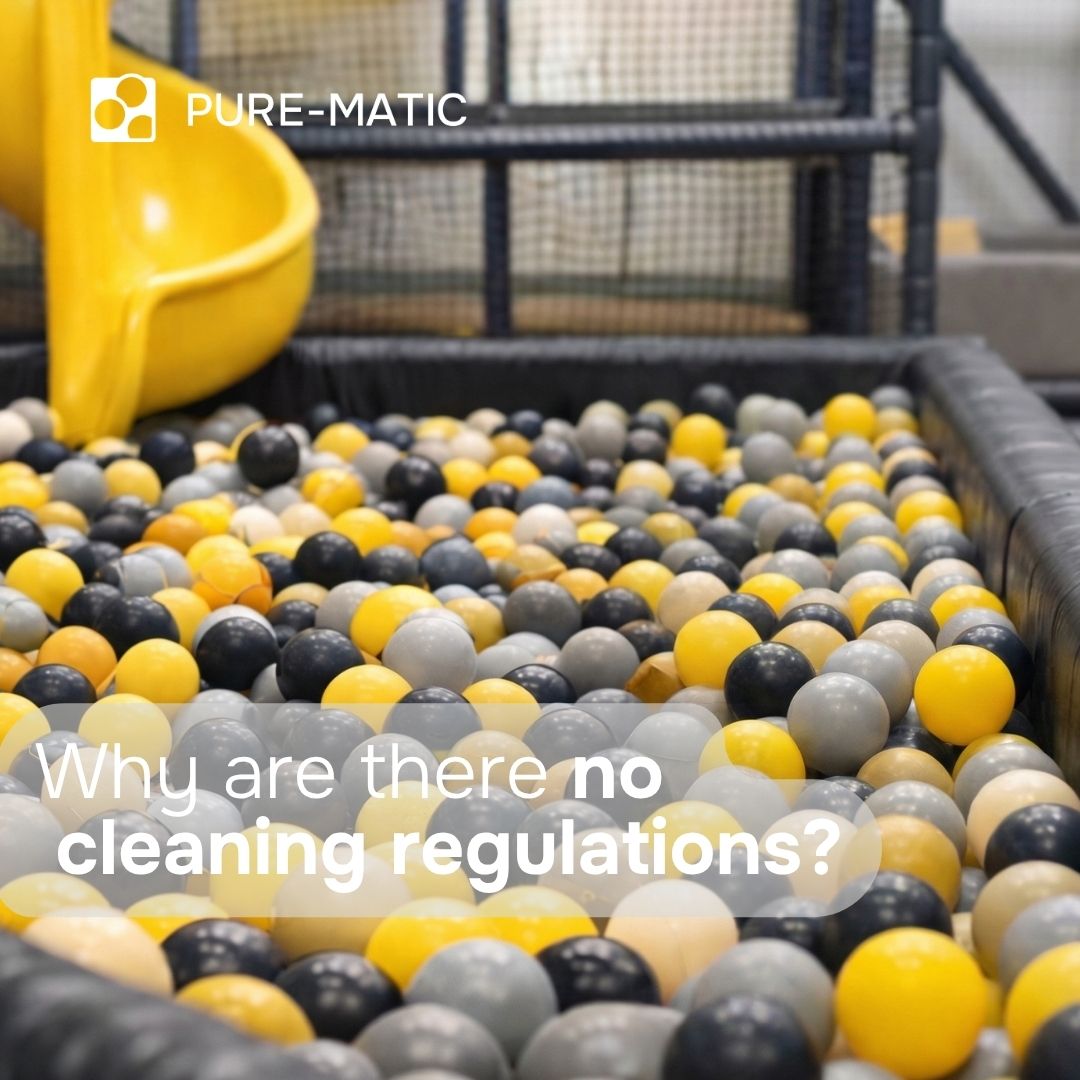
Ball Pool & Ball Pit hygiene: Why aren’t there cleaning regulations — and what operators must do
20/03/2026
No EU or international standard governs ball pit hygiene. Learn why the gap exists — and what it means for soft play and indoor playground operators.